A usually sober traveler stumbles into an all-night drinking session in Russia, where he discovers why the USSR campaigned against alcohol abuse during a trip that tests the limits of his liver, language skills, and dignity.
I don’t drink.
Usually.
It’s not for reasons moral or practical, not for style or even substance: it’s just that mine is not a figure pleading for the addition of empty calories and so, many years ago, I quit. I admit that it has been less of a hindrance to my career than I feared: the contemporary author (which I, alas, am) is forced by modernity to be their own scheduler, marketer, editor, agent, publicist, and social media manager, whereas in yesteryear, all Hemingway had to do was just be a drunk. Turns out that for once the times have risen to meet me, at least on this.
Years ago, long before I was tasked with curating the Poster House exhibition Just Say Nyet: The Soviet Battle Against Booze, I was sent, on assignment, to Russia to work on a travel story for which I was to depart on April 1, just to find out that—April Fool’s!—during my hometown’s warm spring, the former USSR is, in fact, still suffering bleakest midwinter.
It has been impossible not to think, from time to time, writing this exhibition about the last unsuccessful Soviet campaign against alcoholism, that I’ve only been truly drunk twice in my life and that one of those times was, it turns out, in Russia.
This was by design.
I was there for work. But my good friend Stephanie, who came along with me, had tagged along just because she, a dedicated drinker but just an advanced amateur, had wanted the chance to, at least briefly, play in the big leagues. She was in the bleary, diagonal portion of her life, where one drink is downed just to lube the tubes for the one to follow it and, to her, Russia was her Las Vegas, her Lower East Side bar crawl, her Michigan State kegger all rolled into one. This was a woman who kept gin in her water bottle. This was a woman who would pre-game a baptism. And coming from the Russian corner of southern Brooklyn, she knew the foreign stereotype of Russians all too well: all her life she’d been hearing stories of the hard-eyed, seldom-fed, fur-hatted Soviet, raising the bottle in his hand to take a hefty guzzle of something strong in a life of long, hard winters on endless, unforgiving tundra. She knew this man as everyone in western trope-fed society does: he drinks seriously, drinks constantly. Brushes his teeth with beer. Takes vodka with his breakfast.
Her only mistake, really, was coming with me: a dorky guy in a fedora who gets a little wobbly if his congestion requires a thimbleful of cough syrup.
We flew on Aeroflot (whose slogan might as well be Sometimes We Reach Moscow) and, to date this story, it was still in the time in civilized society when people were still allowed to smoke on airplanes, which in our case was a cloud-filled aging 747 with yellowing seats, yellowing food trays, and yellowing people on a 12-hour flight from JFK that would land into a gray, overcast morning in the Tsar’s old stomping grounds.
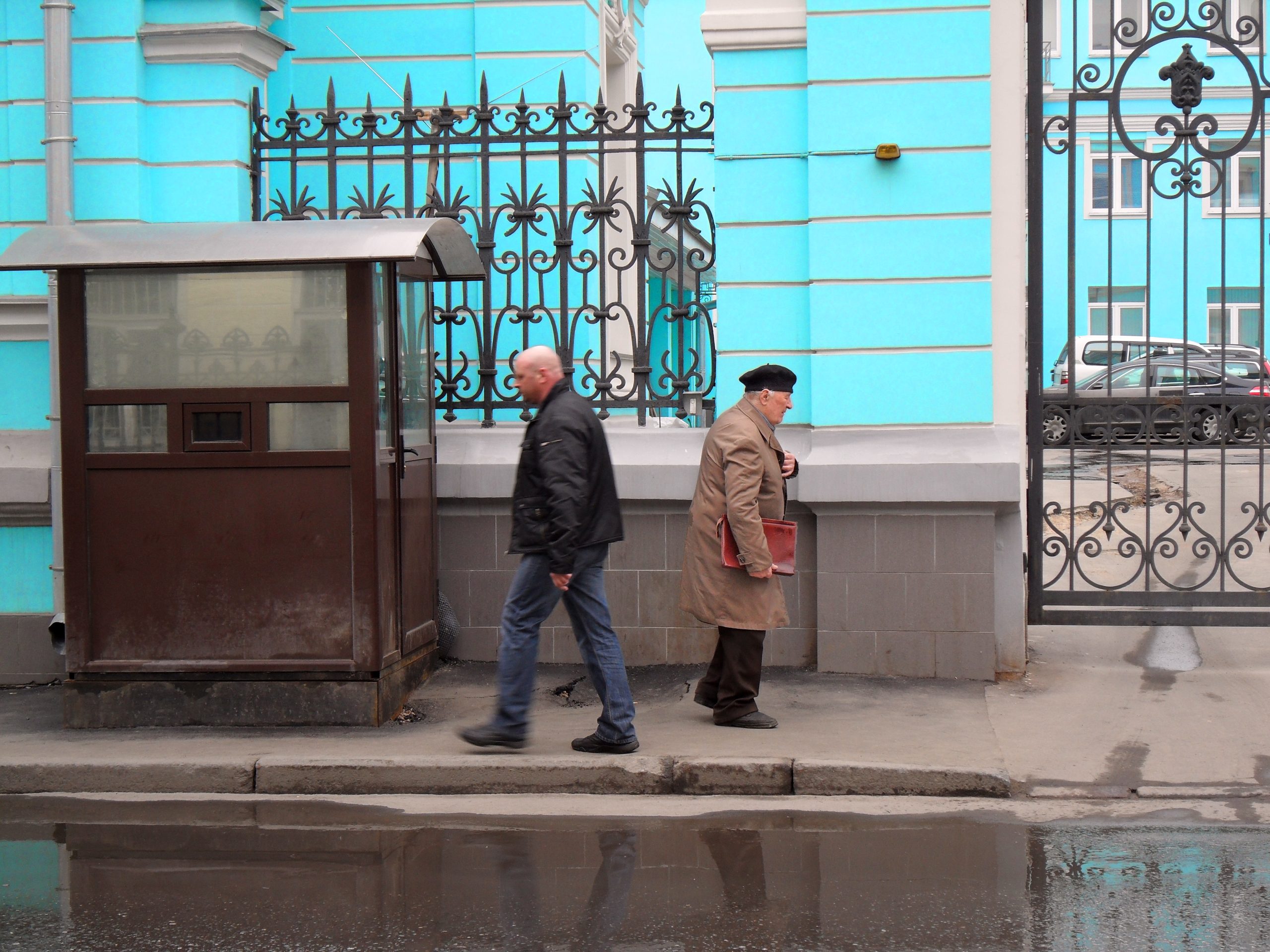
We spent the first few days choking on smog on the street and chain-smoke in restaurants, and being followed everywhere by a less-than-stealthy Russian government agent who I’ll tell you more about in a piece to follow. But after three days of tedious, terrible cultural engagement–so many monuments, so many museums–Stephanie was sick of me, and felt it was time for me to pay the piper, and in this case the piper in question was a bartender. A bartender, very, very far away.
Stephanie had read in Snobby Beer Weekly–or whatever, it was some magazine she read about all the many ways people use hops to ruin a perfectly good water–that there was some place on the outskirts of Moscow that makes a wide variety of their own artisan beer. I use outskirts the way people describe it as Outer Mongolia. This was an hour’s ride out of town on a train full of staring onlookers wondering where we, in our life, had gone wrong. Well, not Stephanie: she was already drunk. Where I had gone wrong.
Stephanie likes fancy beers, wanted to try them all, and I didn’t mind the idea of going somewhere–really, even just one place–where our own personal post-Soviet spook minder might leave us alone.
Now, to borrow from famous Russian author Charles Dickens–this one thing you must remember or nothing that follows will seem wondrous: I had a crush on a Russian girl in college and signed up for a Russian class hoping to learn something and impress her. I didn’t. But I also am one of those people who doesn’t quit, so my week-long infatuation turned into my studying Russian for three years. I liked certain elements of it: the brobdingnagian vocabulary, the similarity in sounds to all the German I’d learned from my grandmother. And still I learned, in those years, exactly the worst amount of Russian: more than enough to easily get myself into trouble, but not nearly enough to get myself out of it. There was a time that my Russian was pretty good–and that time had long passed by the moment I showed up in Moscow.
After an eternally long train ride and a decently long walk through (no kidding) a snow-capped forest that I can only presume was full of polar bears, or whatever we found the place, which wasn’t hard to do because it was the only thing with lights on in the eye-stretch to any horizon. An old, smoked cedar laneside tavern, it was charming and, more importantly, warm.
We saddled up to a bar, and I engaged in the most basic of Russian conversations with the bartender, a 19-year-old kid named Ivan.
“Hello? How you? We want beer, many beer, six beer one plate. Different kind beer. I Brenno, I happy to meet you.” I looked over the menu, parsing the letters. “Please to bring us jelly coxcombs. Please to bring us cheese.”
I wished, for reasons both practical and Cartesian, that the Russian language would have the verb to be. It does not.
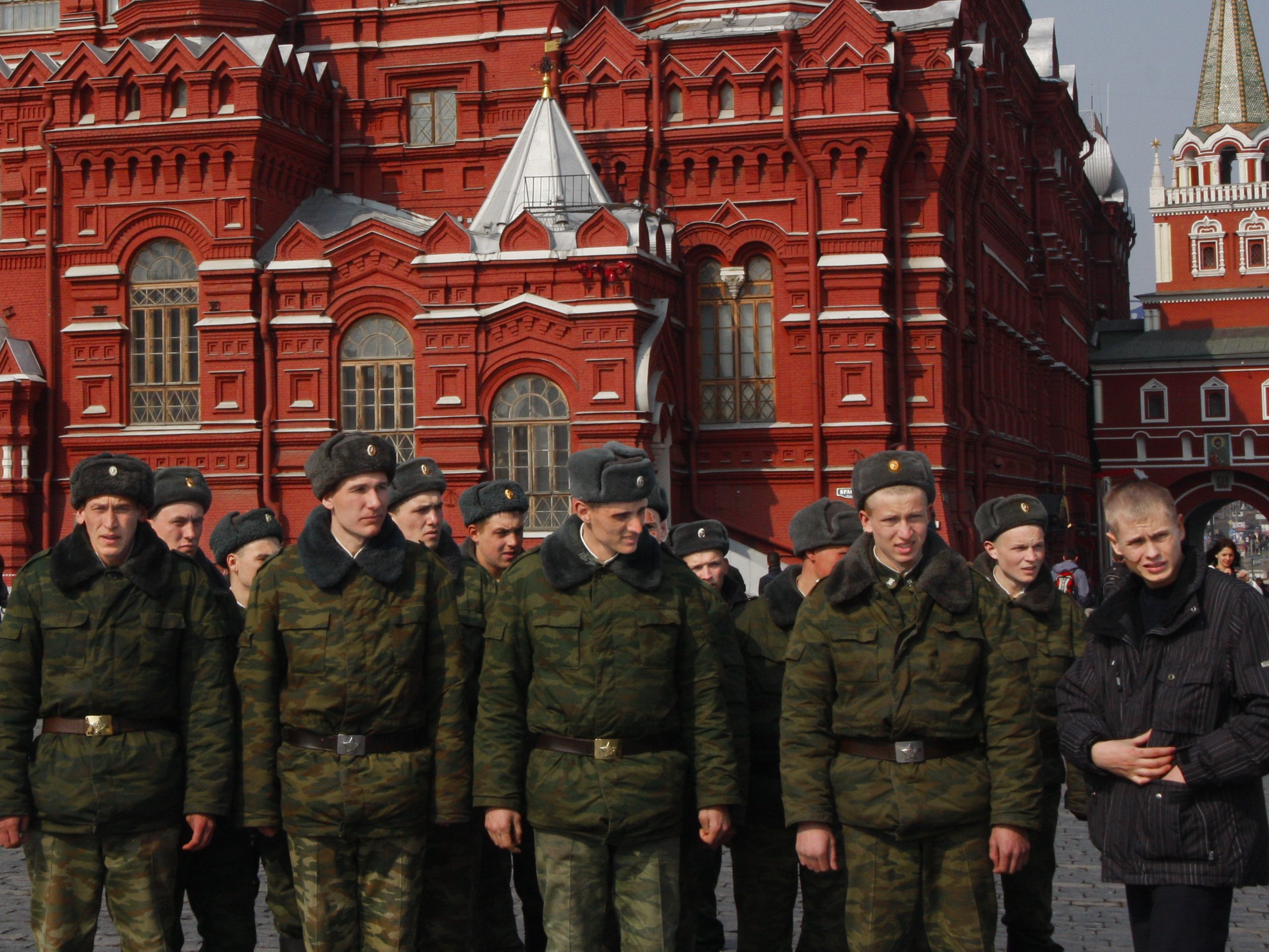
Within minutes, in this tiny local bar in the middle of nowhere, the entire town had seemingly been alerted, and everybody had come out to see two Americans murder both their language and their drink. Ivan was going into the Russian Army in a couple of months, and he was nervous about it, and we chatted about that, and before long, Ivan was getting bottles of homemade vodka for us all to share.
I cannot overstate how many people appeared out of nowhere, on a Tuesday, to come and see this bizarre attraction. I assume that in some corner of the village, some hunched man, distorted face, ragged clothes, was ringing a bell and announcing it. People brought musical instruments. We became the main attraction of the year. People were calling their neighbors, their children, their grandchildren, telling them to come down to the bar and see the crazy American guy in a suit and fedora for no reason and the mortified American girl with him.
Great news: the beer works. Why had nobody ever told me that drinking large amounts of alcohol makes you feel gregarious? That it makes you friendly? Why, for so long, had this secret been kept from me? I was telling jokes in Russian. I don’t know any jokes in Russian, but sure as you’re born, I was telling them. I think, in hindsight, that they were old jokes I borrowed from Ronald Reagan. Reagan was dead and, on my weak liver, so soon would I be as well. Surely neither of us would complain.
Reader, they brought out a flight of twelve beers and five bottles of flavored vodka. To start. It is hard to estimate the number of drinks I had without summoning Stephen Hawking and an abacus. By the end of the night, my Russian was flawless, as was my singing, and my dancing, and my ability to play the guitar, along with a whole host of other instruments. I cannot play the guitar. And I, a person for whom a single drink is a big night, must have had something close to twenty. I may have joined the Russian Army. Had we stayed even a little longer, I think the Russian Army might have joined me.
Stephanie–who is a full foot shorter than I, close to a hundred pounds my lesser–put me over her arm and, in spite of the fact that she couldn’t read their alphabet or speak the language, got us onto a train and got us through the hour-long trip home. I joked, repeatedly and perhaps with sincerity, that we should find a tattoo parlor where I might get a tattoo, on my face, of a slightly smaller rendition of my face. This much I only know from being told: the last thing I remember is being on the long escalator down to the subsequent subway station, which (like most all metro stops in Russia) was set unbelievably deep into the ground to double as a shelter in case of American bombs or, in this case, bombed Americans.
I do not know what happened next, but for this: at 4 am, I awoke on a ceramic floor. I woke on the ceramic floor of a dirty communal bathroom of a youth hostel. I woke on the ceramic floor of a dirty communal bathroom of a youth hostel, looking up at the bright fluorescent ceiling lights, while a group of six to eight German men were standing over me, singing alpine songs and clanging full mugs of sudsy beer in celebration.
For the last months, while collating and combining and researching and writing an exhibition on how the Soviet government, concerned that alcohol might somehow lead to a loss in productivity, I have from time to time remembered the sight of six to eight German men, standing over me, singing and splashing me with beer suds on the floor next to a row of urinals. And I think, in those times, of how even broken clocks can, twice a day, be correct, and how Mr. Gorbachev might, maybe, perhaps, have had a point.
And there you have it: the story of one of the only two times in my life I’ve ever been drunk. And, well, if Poster House ever asks me to curate a relevant exhibition about male beauty competitions at dairy farms… well, then I’ll have an excuse to tell you the other.