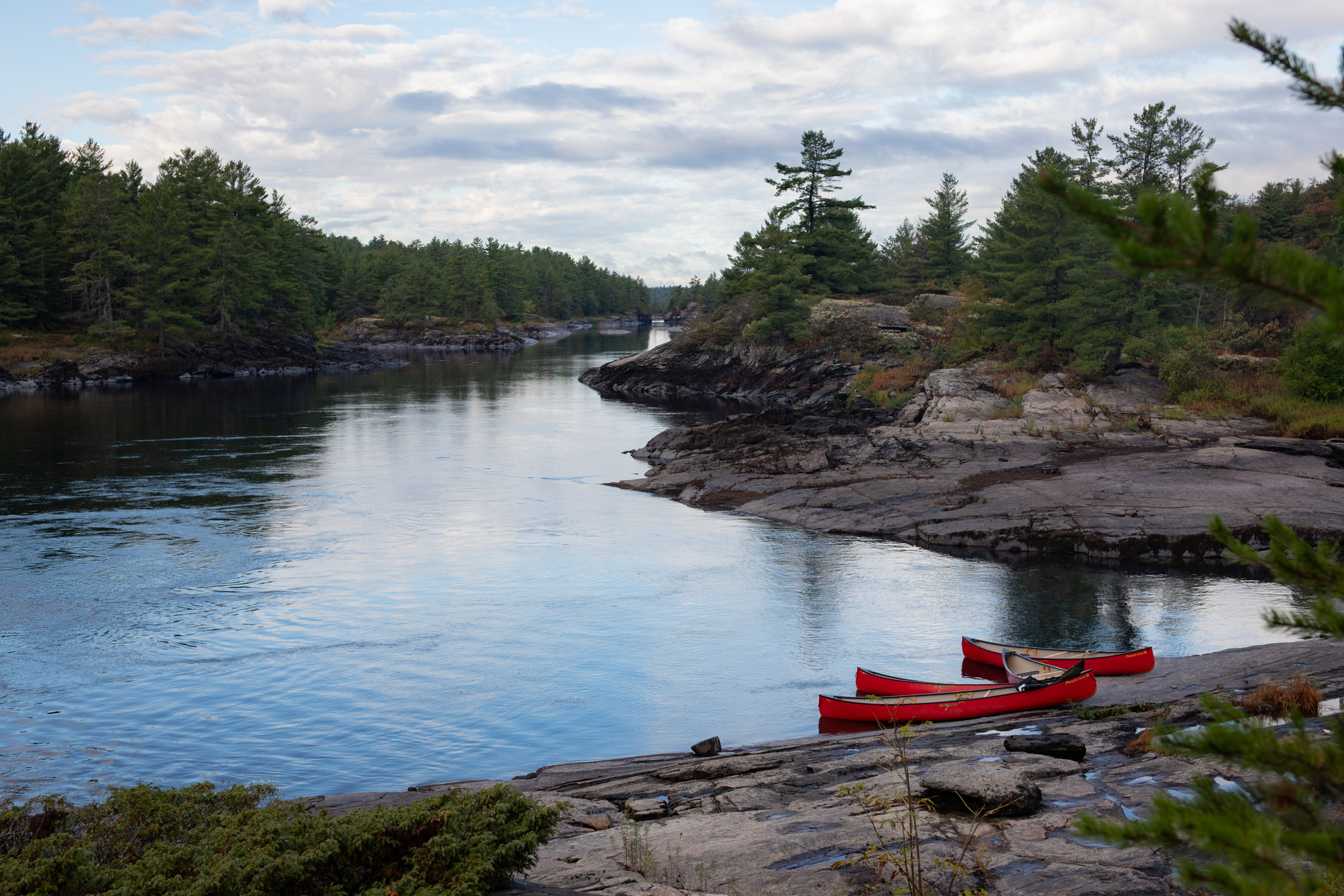
Our ‘The World We Have‘ columnist joins a team of paddlers on a canoe adventure down the great French River in Ontario, Canada, traveling as indigenous communities have for millennia, among a vast, unspoiled landscape that offers a simple philosophy: respect the wild.
We left Toronto and hit the Highway 401 Tim Hortons just before lunch. Moving slowly along the busiest highway in North America felt a far cry from the vast expanse of untouched nature I’d imagined for the months leading up to this trip. But when the concrete stopped, the tree line cleared for a moment, and we were gifted our first unfiltered view of Georgian Bay; the vision cleared again. After a few hours heading North, we pulled into Hartley Bay Marina to pick up the canoes and shuttle up to the launch spot. It was a short drive up to Woleseley Bay in the ‘Red Rocket’–a candy-apple red 1990s minivan which looked like it had seen too many trips–and it felt strange that in that short hour-long drive, we’d be covering the same distance our boats would cover over the next four days. We then pulled into the bay, set up our canoes, and joined the slow current of the French River, the waters that would be carrying us for the next little while.
Ontario in Eastern Canada is essentially one enormous wetland. The rivers of this part of the world cut, weave, overlap, and merge again for hundreds of thousands of kilometres. And yet, out of all the rivers that lie within this giant waterscape, in 1986, the French River was the first river in the whole country to be declared a Heritage River. It was a travel and trade route for the Algonquin and Huron people for thousands of years before the French colonial conquest and expansion, lending the river its modern name. It then became the main travel route of the fur trappers and subsequently the busiest logging waterway in all of Canada. Water has memory, and if rivers could talk, this one would have a lot to say. I was here to go in search of this memory, its ghosts, its wonders, and its watery past, and to do it the same way that it has always been done, with oar and canoe.
The first day was a short one. We aimed South out of Wolesely Bay, where the river turned West through some open water, and ultimately spat us out along a long series of rapids. Some of them, Little Pine and Big Pine, were small enough and deep enough to shoot. But then we hit a section too shallow and rocky to get through, which meant we had to portage around. The portage–picking up everything you can carry, and placing a boat on your shoulders in order to walk hundreds of metres over wet rocks–is certainly not the easiest part of any canoe trip. But it did feel like a rite of passage of sorts. The river had no intentions of making this trip easy. The final stretch of the day was some of the most beautiful water I have ever been on. As the clouds closed in on us overhead, the river narrowed into a few stunning and eerily still gorges. The Canadian Shield, some of the oldest rock on Earth, was slowly creeping closer in on us as we paddled on in silence through the late afternoon. We passed a beautifully preserved moose skeleton at the entrance of a pin-droppingly still little bay. Its skull was perched on a rock, as if it were the guardian at this watery-gate, looking eternally down the river.
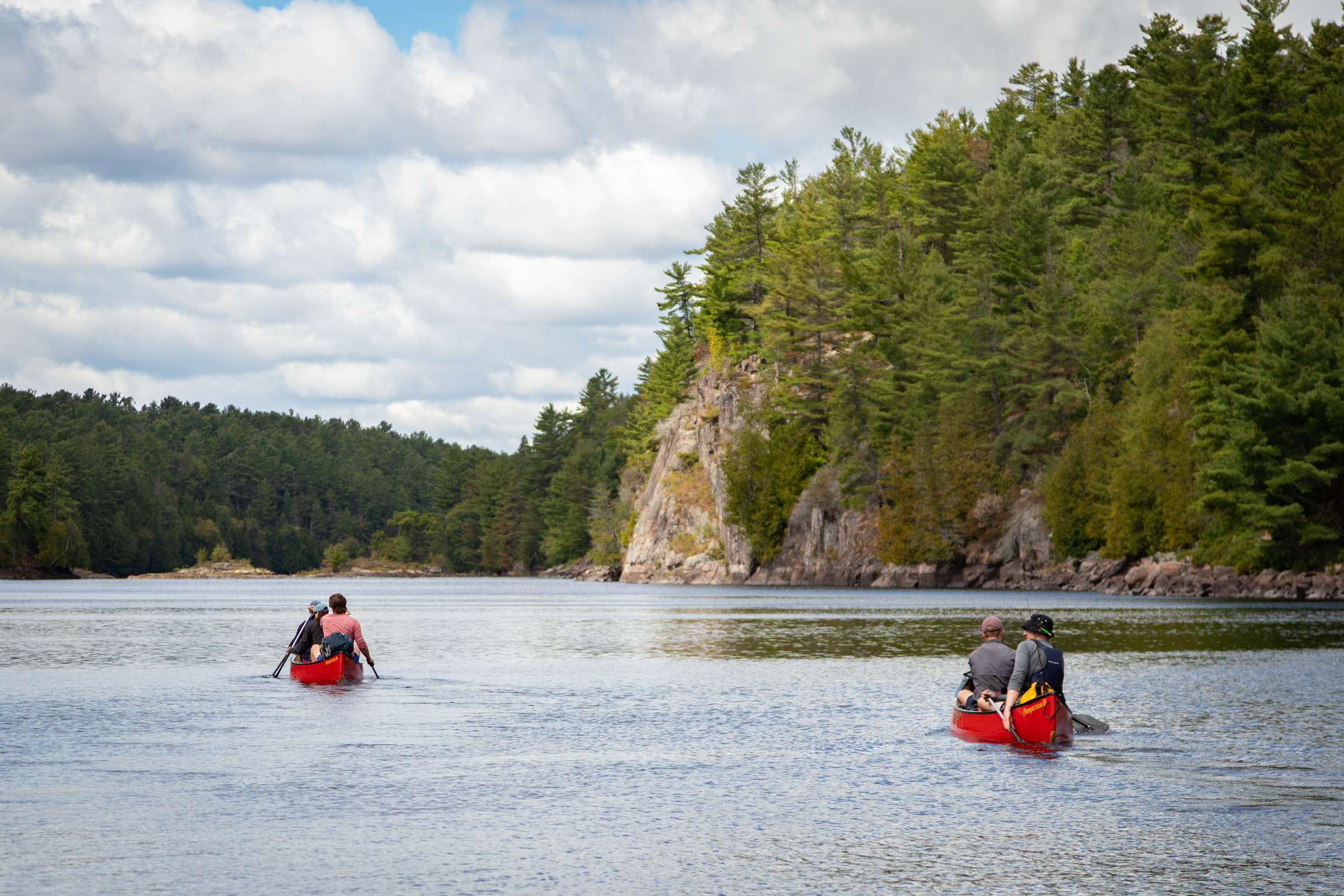
As I was beginning to ruminate, we turned a corner and heard an ominous rumble–the subtle groan of the Big Parisian rapids. We pulled over onto the side of the river and walked along the portage path to get a better look. With a steep drop in, a massive boulder right in the middle, and a string-tight exit to navigate through on some very fast water, it was a daunting sight. There were no other takers, so two of us decided to give it a go. We emptied one of the canoes, pulled back out into the stream, and paddled like hell straight into the middle of it. It was all over so quickly that I had barely been hit in the face by the first big wave when we were around the rock, expertly realigned and shot straight out the small gap in the bottom. This was not my steering oarsman’s first rodeo. We took one more boat down just for fun and set up camp as the clouds broke. It was a fairly fast dinner of whiskey and tortillas, and then we settled in for a wet night, hoping our borrowed tents could hold up against the water as well as our canoes had. They didn’t.
In 1989, the French River watershed became recognised as a provincial park, protecting it in perpetuity. As a provincial park, it has very strict building restrictions. This means that while cabins, second homes, and lake houses do exist along the river, there are no new construction leases allowed throughout the entire river system. The urban footprint on the river has reached its limit, giving open access to the river and its splendour, but securing its conservation status indefinitely. Being able to sleep out in the open, alongside clean, freely running water, is becoming one of the rarest experiences on Earth, and it was a stark reminder for me just how lucky we were to be able to do it.
The next morning, we woke up to a still and murky light. The sun was trying its best to break through, but the clouds seemed too stubborn to give way just yet. We shipped out as the warmth of the day began to hit the cool water, the steam rising to meet with the mist surrounding the army of trees covering each bank. Without much current to carry us, the surface was deathly still. We made our way through a small gully, aptly named the Devil’s Chute, and out into some big open water. The channel seemed to widen and break up and then swiftly narrow again, as if the careful work of the river’s deep-time carving had been constantly interrupted by various islands, inlets, and rapids of ancient granite and gneiss. We canoed past an island that our map described as, “the burial site of Jesuit priests who drowned in rapids upstream from here. There is a legend that says the island is haunted by ghosts of those who were laid to rest here”. The group paddled on in swift silence while I got just close enough to take a picture of the tall white cross at the island’s tip.
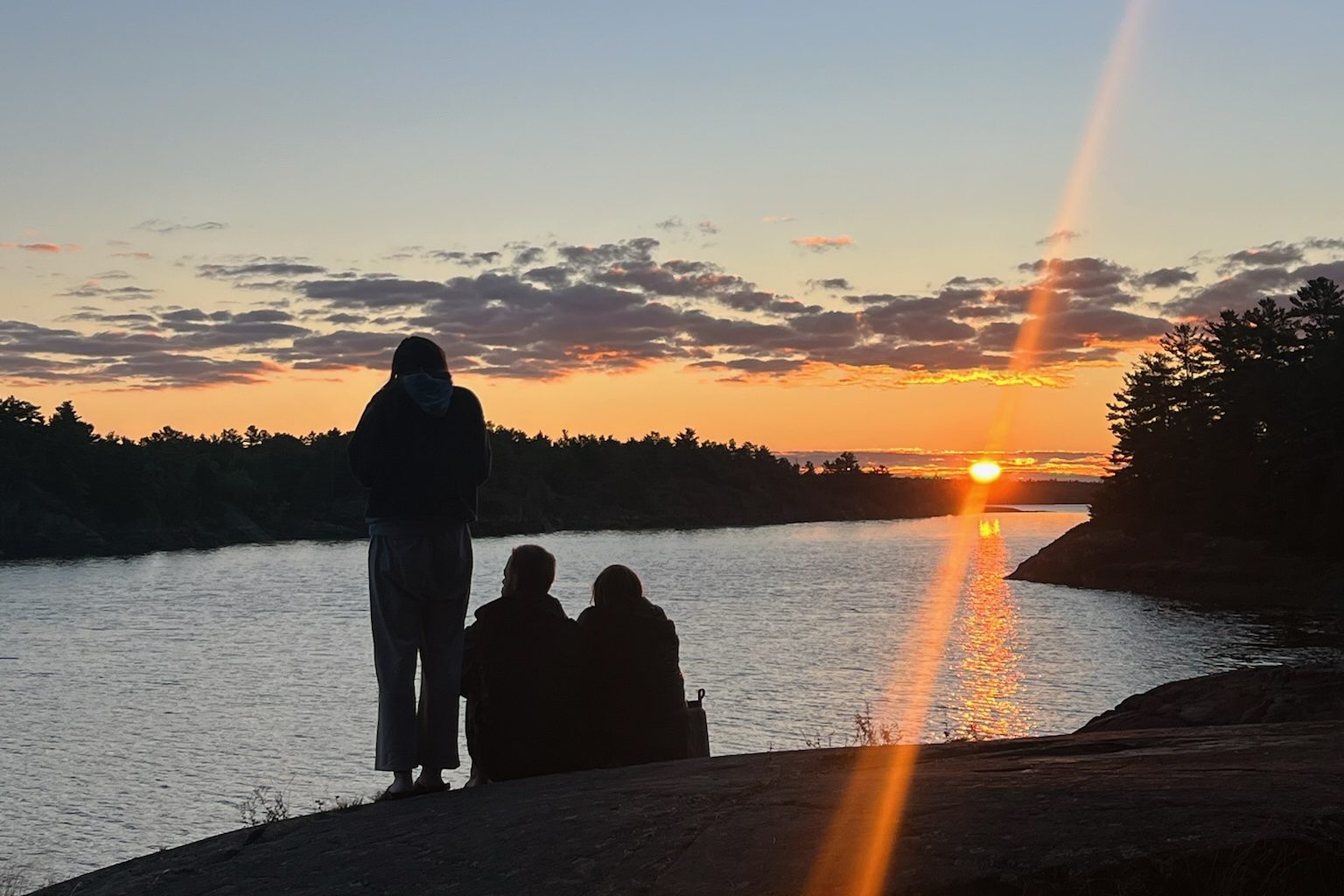
After a challenging twenty-kilometre day, we pulled into a beautiful campsite and set up with the better part of the afternoon still to enjoy. We went for a long swim, built a big fire, cooked some dehydrated food, and passed around stories, songs, and a bottle of Canadian Rye long into the night. We poured a drink out onto the rock for friends absent and toasted to the river whose current had pulled us all here from such different parts of the world. There were nine of us there. Nine friends who had met on the other side of the world and somehow, through the strange serendipitous ways that life works, made it to this very small corner of a very big country. It was a wild and beautiful and starry site. To fill a forgotten place with laughter, community, and a shared love of the nature at our feet is as good a celebration of it as I have yet to find.
Needless to say, the next morning was a slow start. Looking at the bottle of empty ‘Writer’s Tears’ whiskey next to the ashes of the fire, I had to laugh at the irony. When we did eventually get going, it was a grinding first five kilometres around Lost Child Bend and through Dry Pine Bay before we finally made it into the French River main outlet–and the channel greeted us with splendour. It had thinned to about eighty metres wide as the rocks grew taller and sharper on either side. The water was low this year, which meant that we could see the history of previous water lines etched clearly onto the rock like perfect black and orange stencils, the rocks showing us the shadow story of the water’s past. Old-growth lichen–some of the most ancient plants on Earth–hung heavy to the cliff edges as forty-metre-tall Canadian pines grew out of impossibly small cracks in the rocks.
We passed under an old rusty 19th-century railway bridge, and the brand new highway for Settler’s Road, built right next door. We came up to the Recollet Falls, named after Recollet priests who had drowned here, and made our only portage for the day through an incongruous crowd of iPad-clad tourists who had walked there from the Visitors centre nearby. Having had a very long, tiresome day on the river, the campsite could not come soon enough. But the day’s surprises hadn’t ended just yet. When we pulled into camp, there was a pile of wood left next to the neatly swept fire pit, and a beautifully crafted teepee firestarter, coupled with a few gently rolled strips of Birch bark, right in the middle. It was such a small touch, but an incredibly special gesture of respect and community kinship for our lethargic party–who absolutely needed it.
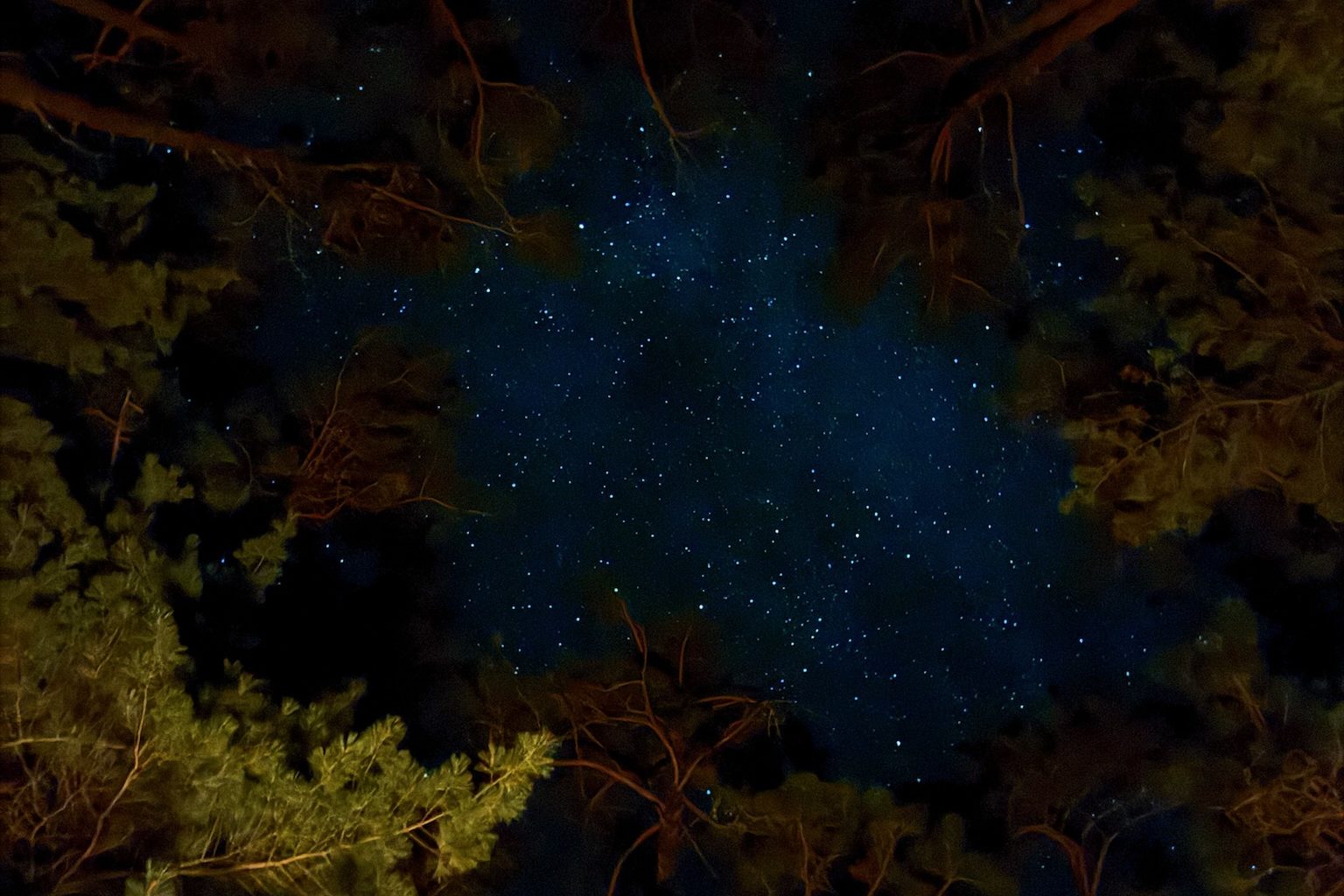
The nature of respect and the respect for nature are ideals that have existed throughout the indigenous communities of the world for thousands of years. It is a simple philosophy: to have access to the wild living world necessitates a responsibility for that world. Welcoming those who are coming after you is such a small but powerful reminder that not only has this place been here long before you, but, if you care for it, it will still be here when you are gone. We had a swim and a delicious dehydrated curry dinner before settling around the fire. And then we talked. We talked Americanah, stars, and access to nature like this. We told improvised ghost stories and some real ones, too (I hadn’t told anyone that I had taken special notice of the almost uncanny site number of our camp when we arrived–666). It was a nostalgic night surrounded by the spirits of the river, both old and new, and it reminded me that special places like this have long histories, but also contested futures. And those of us blessed to see them hold the power to protect them.
As the sun crept up above its blanket of trees to greet us for the final day, we forced ourselves out of the tents to watch it rise. We saw a river otter playing in and out of the glittering dawn-coloured water by our boats, and sat entranced for a little while. Staring up the river from where we had come, we lingered as long as we could over the last morning coffee. We then packed, cleaned up the camp, and fought over who got to make the fire starter for the site’s next visitors. It is always amazing how such a simple act of respect can spread. As we were leaving the camp, someone spotted a picture of two old men, laminated and pinned onto a tree at the entrance to the camp. They were laughing and looking up at the camera from around the exact same circle we had sat the night before, in chairs that looked like they had seen many a campfire. We could only guess at their names, their story, or what it was that connected them to this place. But, through time, we felt a certain sense of community with these two old men whom we were blessed to share this space with, all those who had come before them, and maybe, even in just a small way, those who were coming next.